Everybody says they want the best. Say you’ve got exceptional coffee beans and a local roaster who knows the exact moment to pull them. The barista grinds them fresh and pulls a shot on a twenty-thousand-dollar espresso machine. In go two cream, two sugar. Haven’t even tasted it yet. Could’ve slept in and bought a double-double at the drive-through.
A chocolatier picks a single-origin cacao for what you can taste in it. If what you wanted was milk chocolate, say so before somebody breaks out the good bar. And if you’re pouring Pepsi into a single-malt Lagavulin, set the bottle down before you hurt someone. We’ve got a few things to settle before we let you near the lobster.
Here in Shediac, we know what the knuckle meat of a good lobster tastes like. Sweet enough to eat standing at the counter with a shell cracker still in your other hand. Yes, there’s butter on the table. But it can wait one bite.
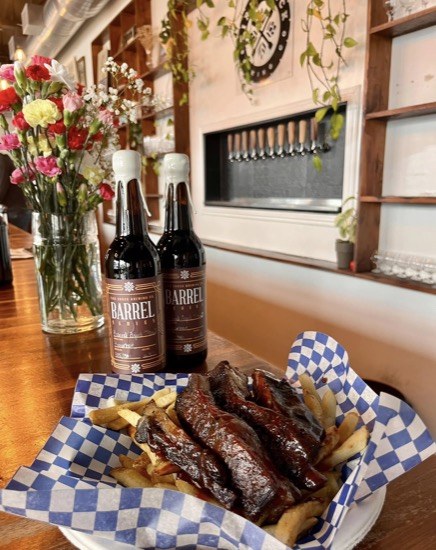
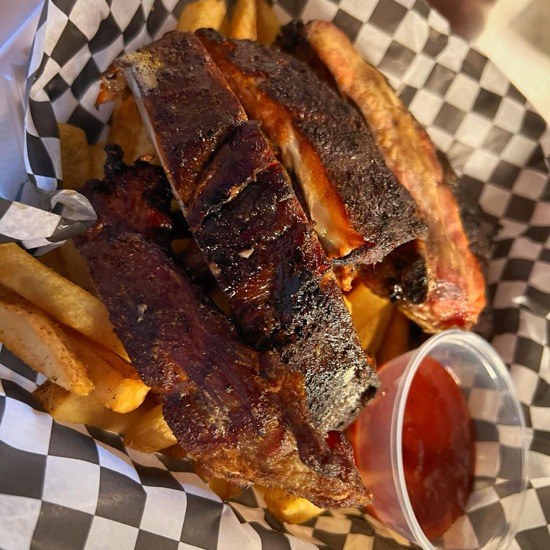
That’s how we feel about ribs at Morse et Marteaux BBQ Smokehouse. Before the sauce goes on, the pork ought to be worth eating. The best ribs come out of a wood-fired Texas offset pit. Ours are on the dry side. Dark at the edges, with a good chew between the bones. That’s how we like them. If the meat has to fall off the bone to make you happy, the McRib is probably more your speed.
If you boil the ribs, taste the water
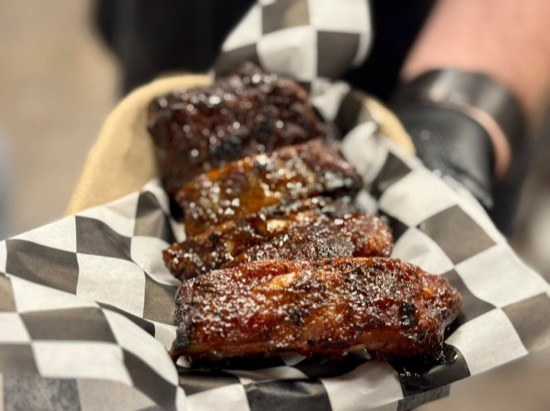
You can paint a rack brown in thirty seconds. Bark takes hours.
Put a rack of pork ribs in a pot and simmer it long enough. The connective tissue softens, the meat loosens from the bones, and some of the flavour goes into the water. Taste a spoonful. That’s pork you’re about to pour down the sink.
Now brush the rack with a sweet sauce and finish it over a hot grill. The glaze bubbles and browns. You’ll get sticky fingers and a clean bone. But while those ribs were underwater, they couldn’t develop the one thing we’d fire up a whole pit for. Bark. That dark, peppery crust that clings to the meat when you cut the rack.
Why the fire sits off to one side
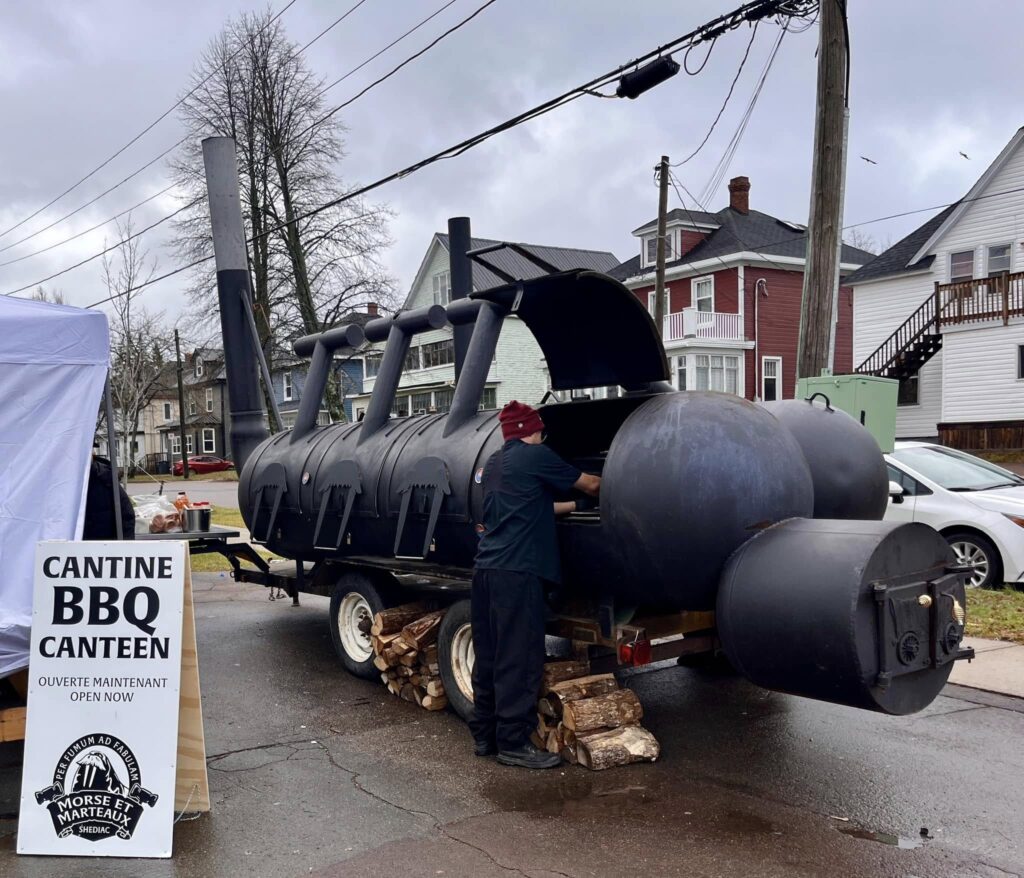
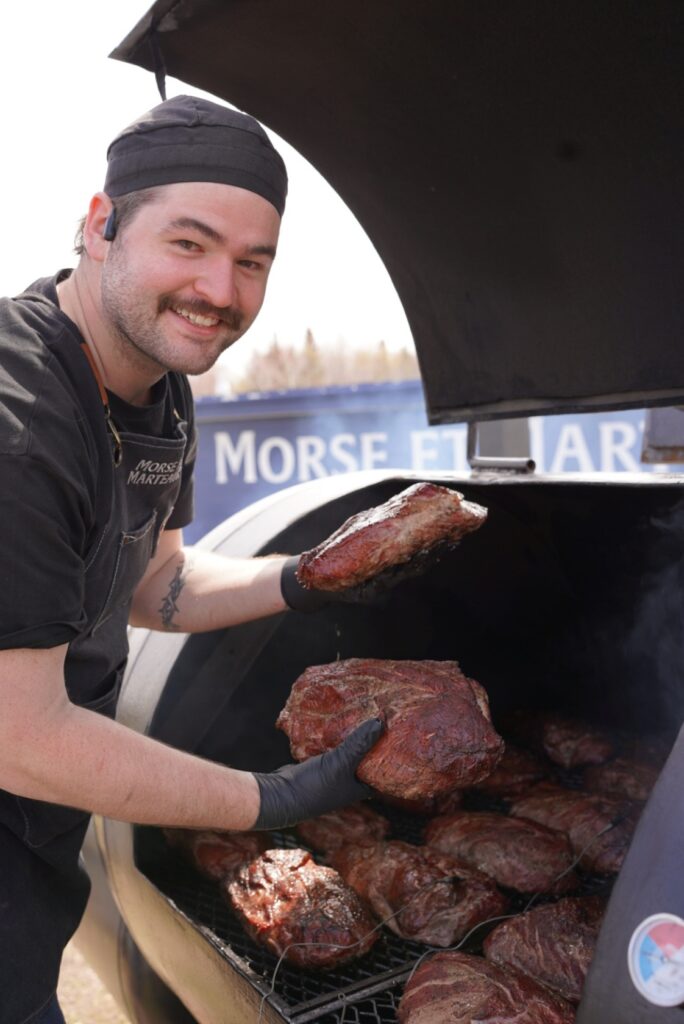
Our offset smokers are 1,000-gallon steel pits. Open the small door at one end and you’ll find a maple fire. The ribs sit in the long chamber beside it. The chimney draws heat and wood smoke across the racks. That’s what offset buys you. The fire gets the air it needs to burn cleanly, and the pork gets hours of steady heat out of reach of the flames.
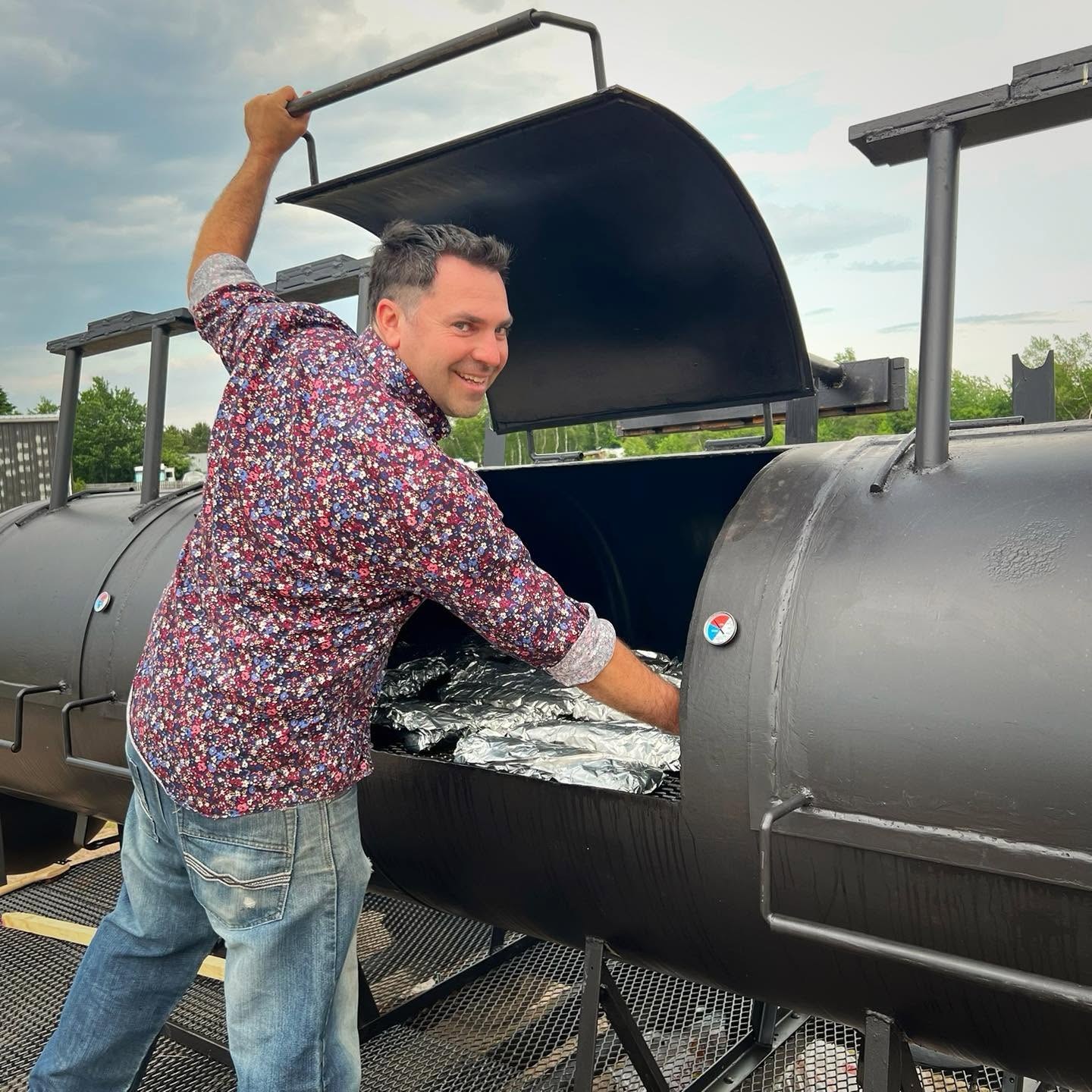
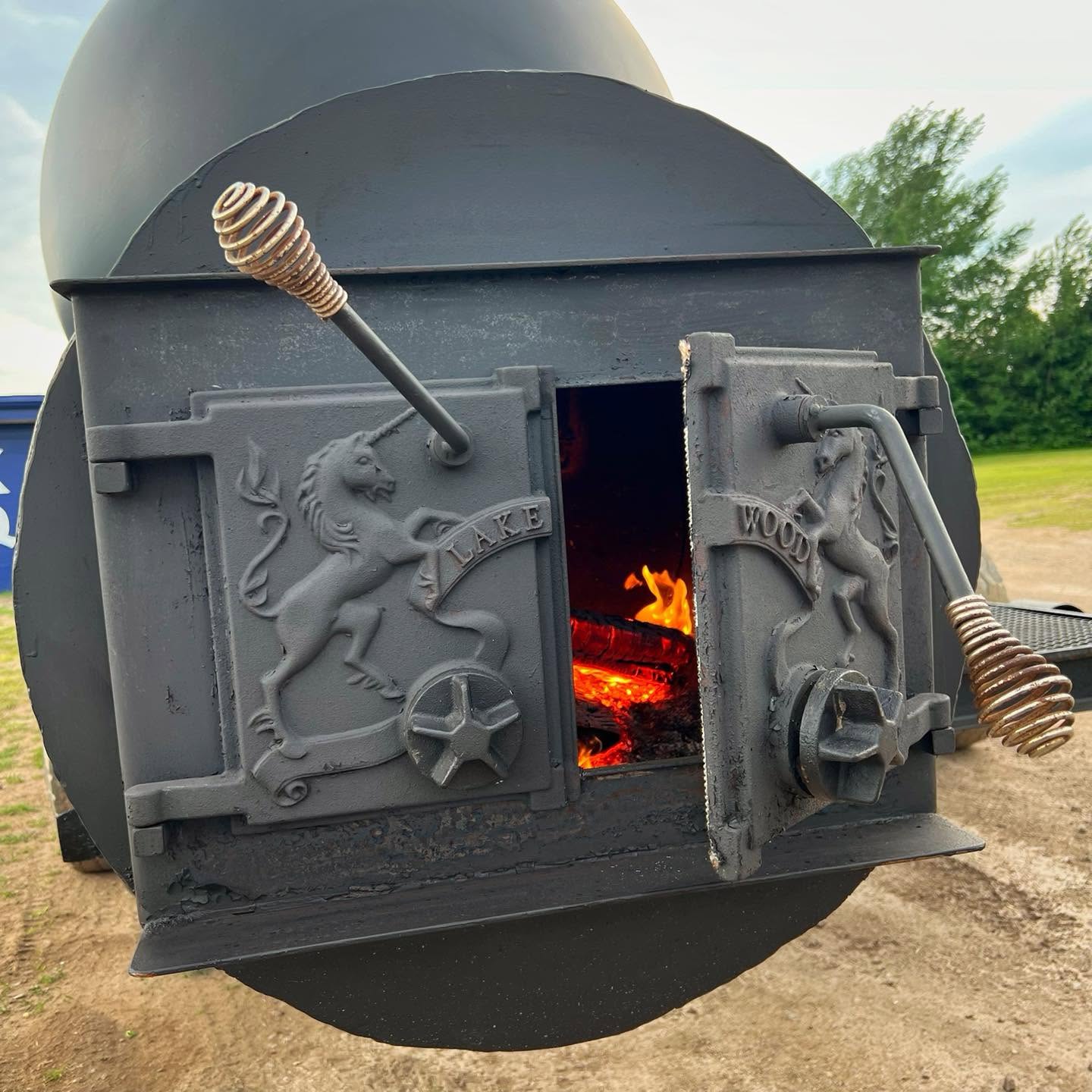
A fresh split of maple catches on the coal bed. You watch how it burns. You mind the draft. You can feed the fire all afternoon without lifting the lid just to admire your work. Every time you’re tempted to hurry things along, there’s a perfectly good pile of wood that needs splitting.
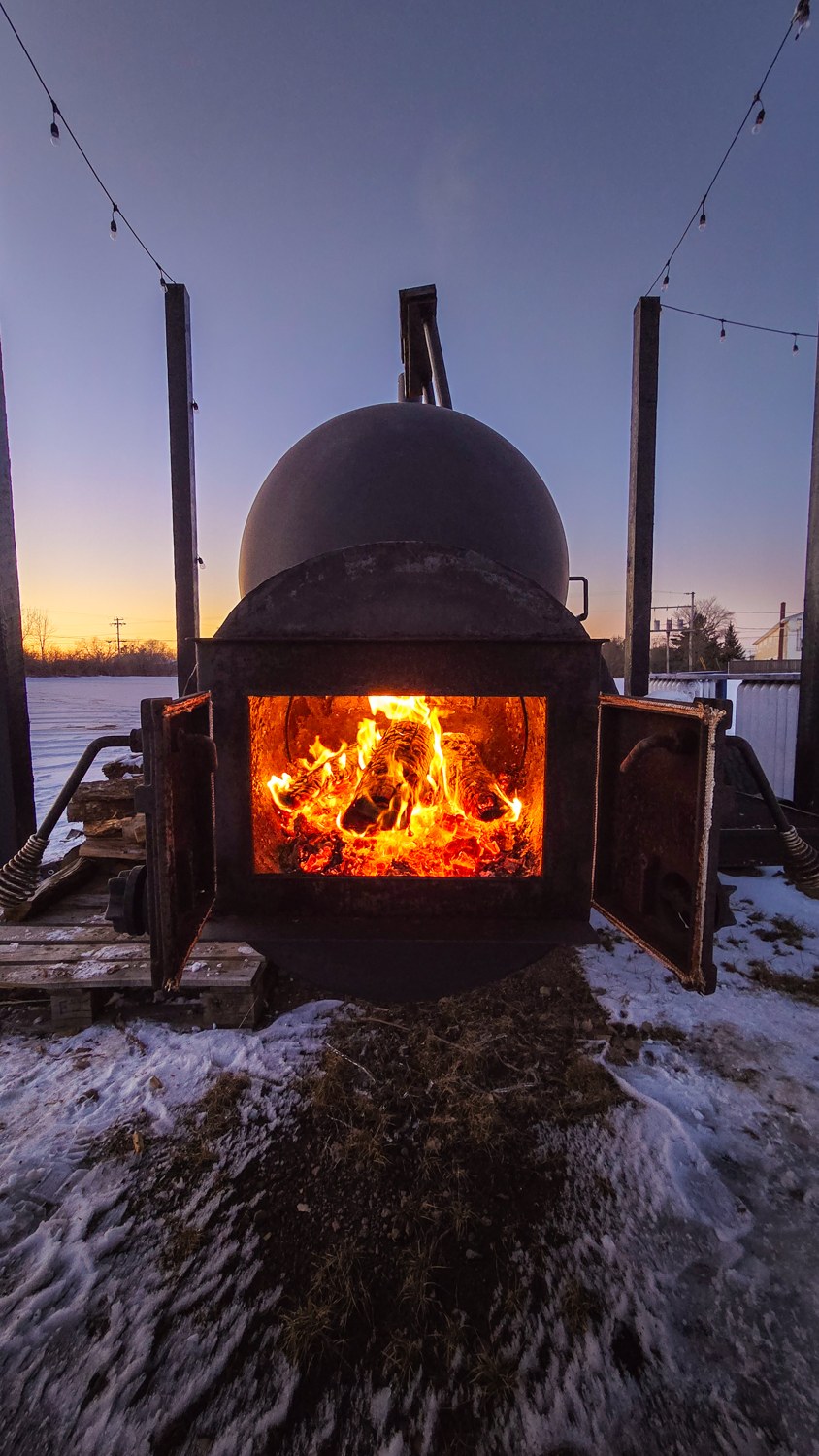
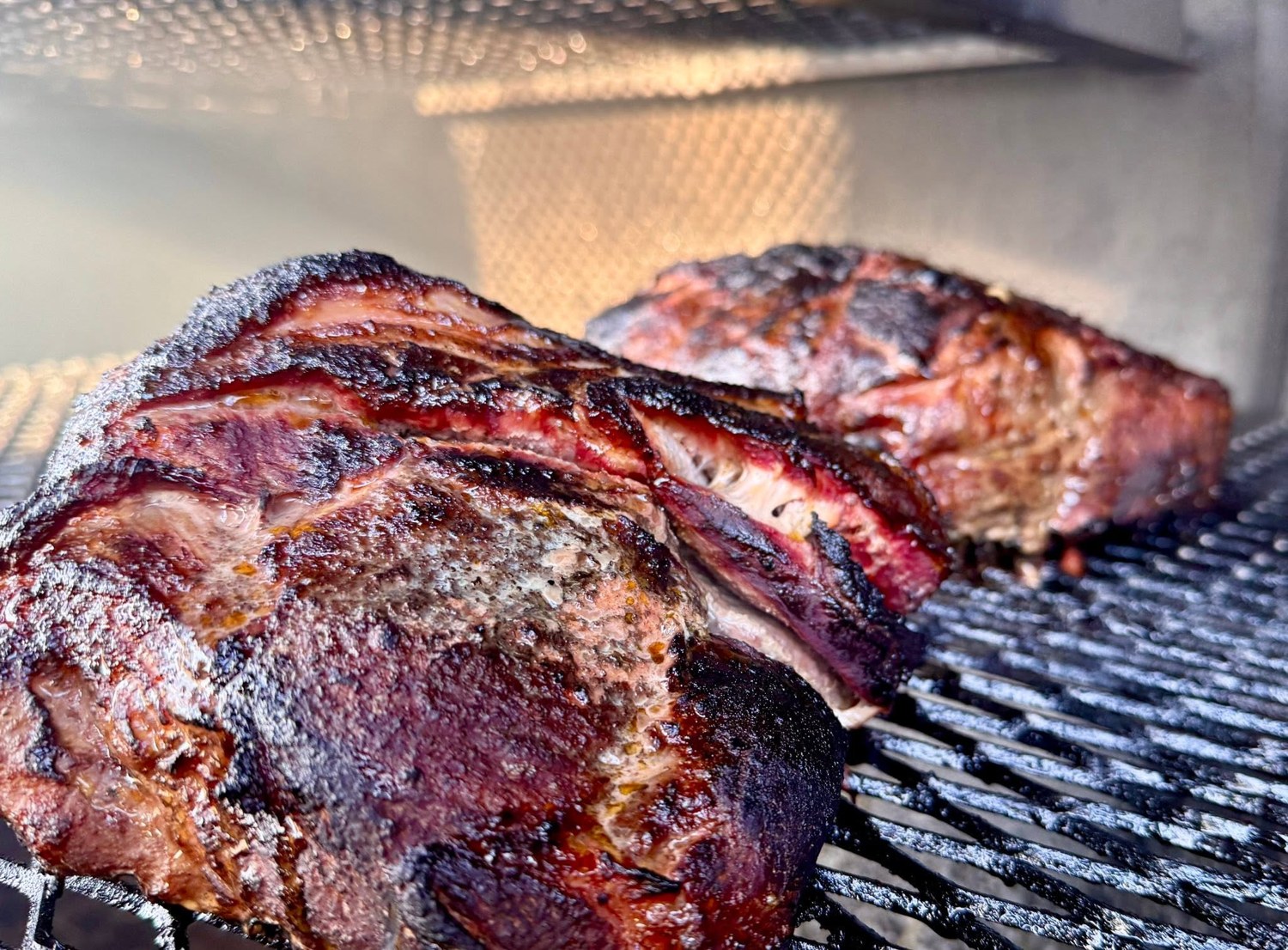
All the while, two things are happening to the rack. Inside, the fat slowly renders and the connective tissue softens. Outside, moisture leaves the surface. The seasoning and meat juices concentrate, smoke settles, and that bark sets. By the time we take a knife to it, we’ve got exactly the rib we wanted. Dark at the edge, firm between the bones, and enough chew to make the first bite last. The meat comes away where you bite it. The rest holds on for you.
Take the end rib
When the rack hits the table, reach for an end. That outside edge wears more bark than any other rib on the rack. Get your teeth through it and into the pork underneath.
Time, patience, and smoke. That’s the whole recipe.
We make a damned good sauce, too. It can wait one bite.